.jpg)







For years, digitalization in aviation was perceived as operational support: reservation systems, DCS, GDS, software-assisted maintenance. Today the board has changed. Artificial intelligence (AI) has become the core of the business model, directly impacting the P&L, the passenger experience and the resilience of critical infrastructure. And, in this context, the aeronautics and airports CIO is no longer a “chief information officer”, but an indispensable voice at the board table.
Let’s see how this translates on the track:
The new paradigm: From technical support to business strategy
Aviation has always been technology intensive, but the logic has changed: IT used to follow the operation; now IT, driven by AI, defines the operation. The CIO moves from managing servers to orchestrating data ecosystems that condition rotations, turnarounds, ancillary revenue and investment decisions.
But the real challenge is another: AI turns every technical decision into a strategic decision. Choosing a predictive analytics platform is no longer a back-office project, but a lever for:
- Reduce operating costs (fuel, maintenance, downtime).
- Increase revenues (better capacity management, dynamic pricing, terminal retailing).
- Mitigate risks (cybersecurity, business continuity, EASA/AESA regulatory compliance).
The data speaks for itself: in an environment of tight margins, a few minutes less turnaround time per flight or 2-3% fuel savings at fleet level can add up to millions of euros per year. And that efficiency increasingly stems from decisions led by the CIO.
The role of the aeronautical and airport CIO in the data age
In the age of AI, the aviation CIO becomes the “architect of competitive advantage”. Their focus is no longer just on the availability of systems, but on the monetization of data throughout the operational cycle, both airside and landside.
What does this mean in practice?
- Route profitability decisions: AI models that combine demand history, price elasticity, ATC constraints and fuel costs to recommend frequencies, schedules and aircraft types.
- Passenger experience management: use of terminal flow data, security filter times and consumption patterns to redesign Smart Airport processes and layouts.
- Fleet and maintenance efficiency: Digital Twins integration of critical engines and systems to anticipate failures and optimize maintenance windows.
In airports, the CIO is also the great integrator of heterogeneous systems: AODB, BHS, FIDS, biometrics systems, retail platforms, parking, ground transportation. AI only generates value when all these systems “speak the same language” and are aligned with the airport manager’s business strategy.
How is artificial intelligence used in aeronautics?
Artificial intelligence in aeronautics is mainly used for predictive maintenance of aircraft, optimization of flight trajectories to reduce fuel consumption and emissions, and advanced design of aerospace components through simulations and Digital Twin models that accelerate certification and improve operational safety.
So much for the overview. Now, let’s get down to the operational detail:
Airline and Industry Use Cases
In the airline and manufacturing environment, AI is no longer a test pilot: it is in production, impacting daily operations.
Let’s see how this translates on the track:
- Predictive maintenance of engines and systems: algorithms that analyze real-time vibration, temperature, cycling and event data to estimate the remaining life of critical components. This allows to plan shutdowns, reduce AOG and improve fleet availability.
- Digital Twins of aircraft and engines: virtual models that replicate the physical behavior of the equipment. AI matches these models with real operating data to simulate scenarios, optimize configurations and validate changes before applying them in the real world.
- Route and flight profile optimization: systems that recommend 4D (space + time) trajectories taking into account weather, ATC congestion, noise restrictions and fuel cost. The goal: minimize consumption and emissions without compromising punctuality.
- Crew rotation management: tools that combine fatigue rules, labor agreements and operational constraints to generate optimal assignments, reducing last-minute changes and improving crew satisfaction.
- Automated visual inspection: machine vision applied to airframes, wings and components to detect cracks, corrosion or FOD damage with greater accuracy and speed than purely manual inspection.
But the real leap is in the integration: when the flight plan, maintenance plan and crew plan are fed from the same AI layer, the CIO can orchestrate a much more resilient operation in the face of delays, adverse weather or technical incidents.
How is artificial intelligence used in airports?
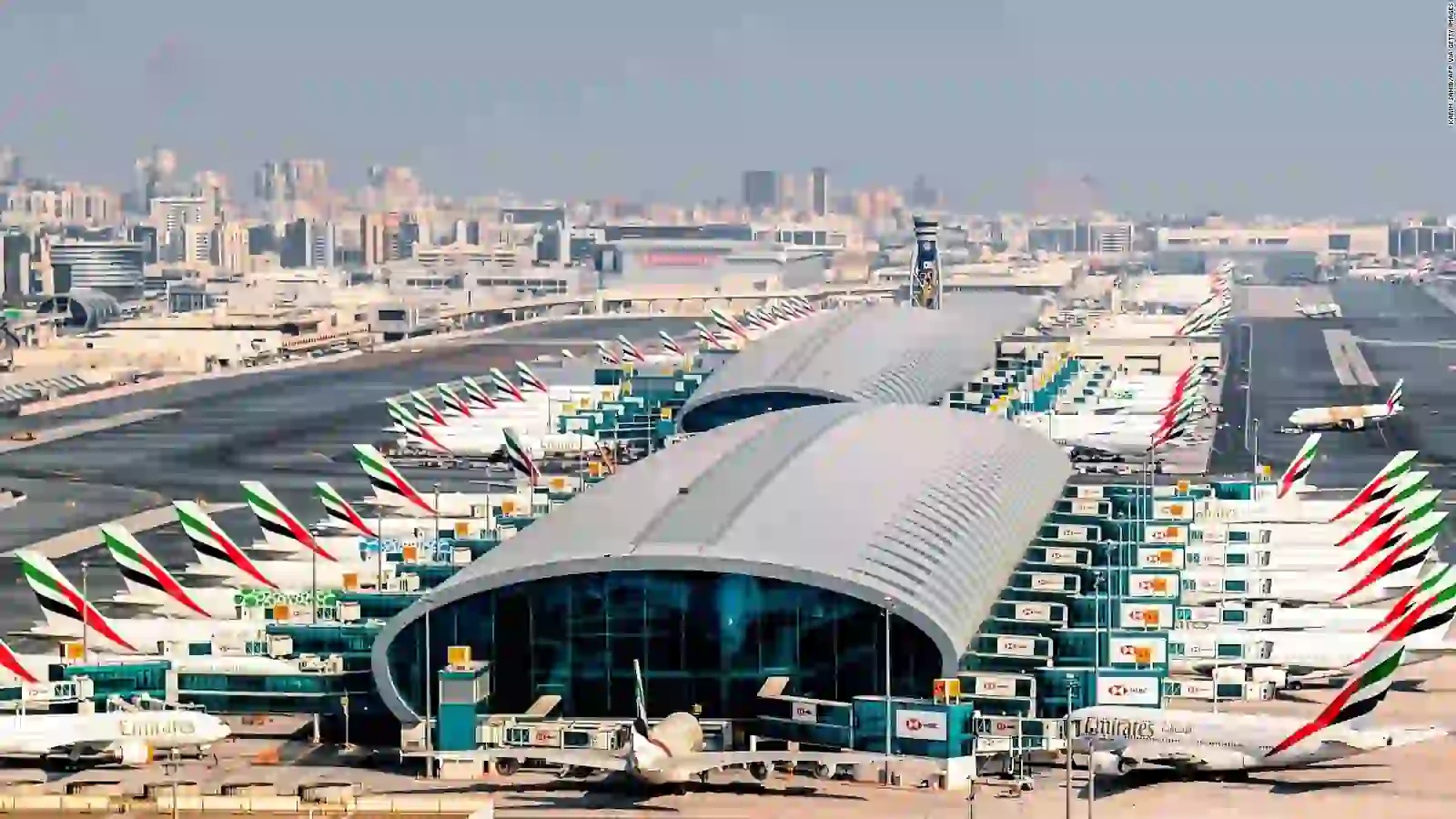
In airports, artificial intelligence is used to manage passenger flow through biometrics systems, optimize slot and gate allocation in real time, and automate intelligent baggage handling in Baggage Handling Systems, reducing incidents, waiting times and operating costs.
The terminal is no longer just a building: it is a dynamic system where every decision affects the passenger experience, commercial revenues and the timeliness of operations.
The Smart Airport intelligent terminal
The Smart Airport concept relies on AI to turn scattered data into coordinated decisions. Where do you see it most clearly?
- Biometrics in filters and boarding: facial recognition and biometric verification reduce control times, improve security and enable more predictable flows. The CIO must ensure integration with airline, police and border authority systems.
- Slot and gate optimization: algorithms that reassign gates and parking positions based on delays, critical connections and airside restrictions, minimizing taxi times and improving turnaround.
- Intelligent Baggage Handling Systems: AI that anticipates demand peaks, adjusts belt speeds, prioritizes connecting baggage and detects anomalous patterns that may indicate incidents or security risks.
- Queue and passenger flow management: video and sensor analysis to measure real-time occupancy at check-in, security, passport and boarding. AI recommends opening/closing of stations and redesign of flows.
- Commercial demand forecasting: models that combine flight data, passenger profiles and seasonality to optimize store mix, prices and campaigns in retail and F&B.
But the real challenge is different: AI in airports must not only be efficient, but also reliable and explainable. The airport CIO has to balance innovation with regulatory compliance, biometric data protection and coordination with multiple stakeholders (airlines, handling, security forces, concessionaires).
The critical role of the aeronautical CISO and airports
The hyper-connectivity that makes Smart Airport and data-driven airborne operation possible also expands the attack surface. Every sensor, every API and every integration between airside and landside systems is a potential intrusion vector. This is where the aeronautical and airport CISO becomes a key figure.
In aviation, cybersecurity is not just a compliance issue: it is an essential component of operational safety. A major incident can paralyze an airport, compromise ATC systems or expose sensitive passenger and crew data.
Cybersecurity as a pillar of critical infrastructure
The aviation industry is classified as critical infrastructure. That means that the CISO not only protects servers, but must also have a deep understanding of the aviation operation to prioritize risks and design defenses proportional to the potential impact.
Let’s look at the main fronts:
- Protection of ATC and communications systems: ensuring the integrity and availability of air traffic control systems, ground-to-air communications and data networks that support airspace management.
- Biometric and PNR data defense: The adoption of biometrics and passenger data exchange (PNR, API) requires robust encryption, anonymization and data governance controls.
- Defensive AI for threat detection: use of AI models to identify anomalous patterns in networks, access and user behavior, enabling near real-time responses to attacks.
- Digital supply chain management: risk assessment on software vendors, integrators and third parties accessing critical systems, from MROs to cloud service providers.
- Resilience and business continuity: Incident response plans that contemplate key system downtime scenarios, with manual procedures and coordination with aviation authorities.
The data speaks for itself: a cyberattack that leaves a major airport inoperative for hours can generate millions of dollars in losses, damage the reputation of airlines and managers, and trigger regulatory investigations. This is why the CIO-CISO tandem is already a structural part of any AI strategy in aviation.
Future management training in the face of technological disruption
AI has changed the rules of the game, but it does not eliminate one reality: aviation remains a highly regulated, capital-intensive and extremely safety-sensitive industry. Future industry executives-whether they are CEOs, COOs, CIOs or CISOs-need to be fluent in both worlds: that of the traditional aviation business and that of technological disruption.
What does this require in terms of competencies?
- Strategic insight into data and AI: understand how AI models impact P&L, punctuality, passenger satisfaction and sustainability.
- Knowledge of the regulatory framework: familiarity with EASA, EASA, data protection regulations and cybersecurity standards applied to critical infrastructure.
- Ability to dialogue between areas: translate operations, maintenance, commercial and safety needs into concrete technological requirements.
- Risk culture and resilience: integrating cybersecurity and technology risk management into board decision-making.
But the real differential lies in specialization: it is not enough to know about AI in the abstract, or about aviation in general. The value comes when the manager understands how a predictive maintenance model affects fleet planning, how a biometrics solution impacts the terminal layout, or how a cybersecurity architecture conditions the integration of new digital services.
At this point, specialized executive training in aviation management and AI becomes a competitive advantage. It is not about “learning to code,” but rather about acquiring the language, decision-making frameworks, and systemic vision required to lead the digital transformation of airlines, airports, and ecosystem providers.
Programs like ITAérea’s Master in Artificial Intelligence and Digitalization for Aviation (MAIDA) address this exact need: 600 hours designed to train executives capable of deploying AI, data science, and digital twin solutions across the entire air transport value chain—from optimizing predictive maintenance and operations management to cybersecurity and the passenger experience in the Smart Airport. This is a profile that, as we have seen throughout this article, the sector is demanding with increasing urgency.
In short: AI has brought the aviation and airport CIO and CISO to the center of management strategy. Whoever aspires to lead the industry in the next decade will have to understand that, in aviation, competitive advantage no longer takes off only from the runway, but also from the layer of data and algorithms that support it.