.jpg)






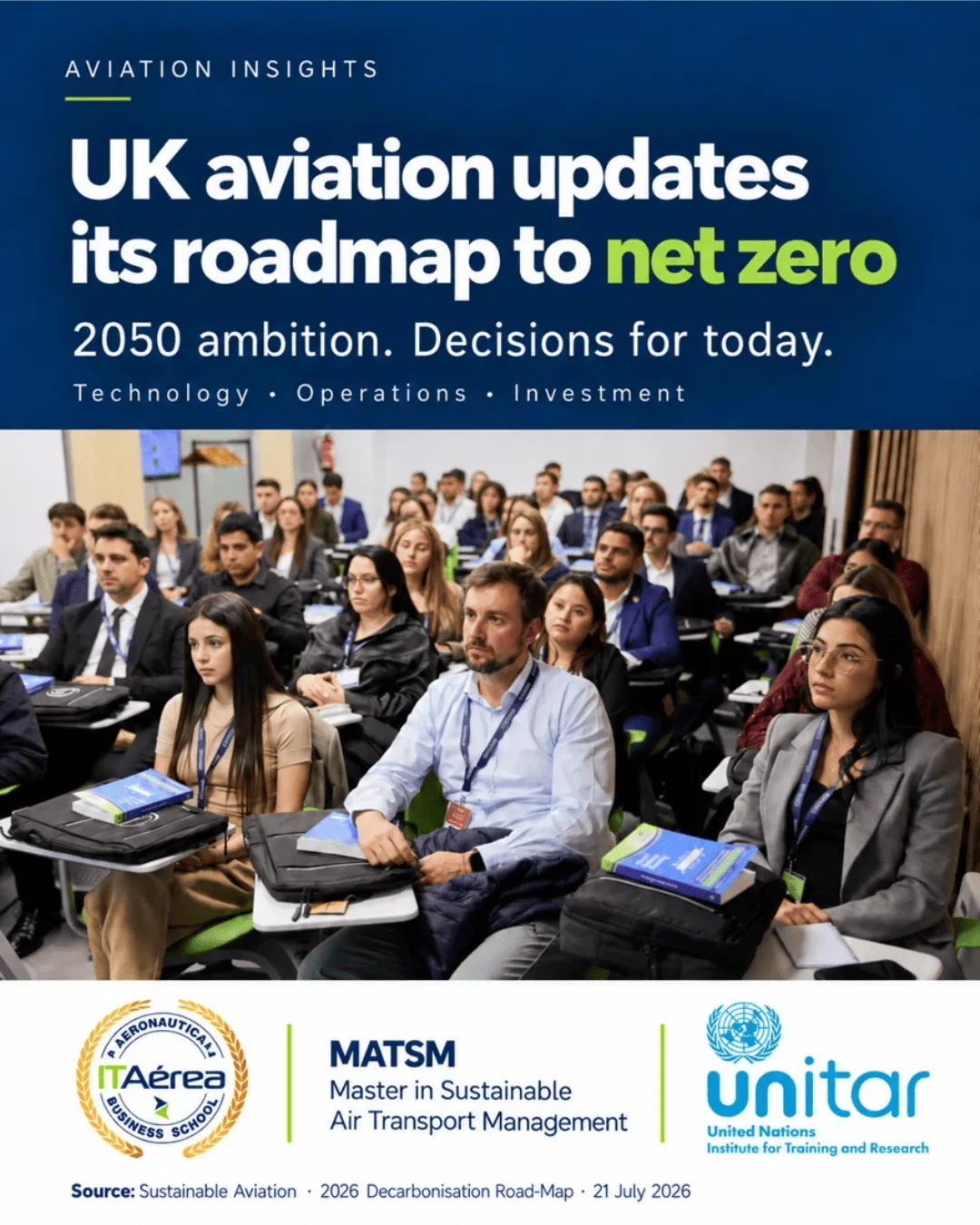
At a time when global aviation faces the urgent mandate of decarbonization, bridging the gap
between academic theory and live flight operations is critical. My journey at ITAérea Aeronautical
Business School during my Master in Sustainable Air Transport Management served as the exact
catalyst that translated environmental concepts into an operational milestone, culminating in my
recognition as Avianca Costa Rica’s Top Fuel Performer for the 2024 calendar year.
During my graduate studies, my research focused heavily on operational eco-efficiency. I
dedicated an entire, comprehensive chapter of my graduation thesis to this topic, conducting
deep research specifically to analyze how these high-level strategies could be practically applied
to my day-to-day operations in the cockpit. Rather than allowing this data to remain purely
theoretical, my objective was to take those findings and integrate them straight into the flight
deck of the Airbus A320. By optimizing aircraft handling and energy management based on my
thesis research, I systematically executed core eco-efficient practices:
Decelerated Approaches: By optimizing continuous descent profiles, the aircraft remains in a
clean aerodynamic configuration as long as safely practicable. Delaying flap extension to the
optimum tactical window minimizes drag and keeps engine thrust at idle for longer periods.
Reduced Flap Landings: Whenever runway length and weather permitted, I utilized Flaps 3
instead of Flaps Full. This operational choice significantly reduces aerodynamic drag on final
approach, lowering the engine thrust required to maintain the glide slope and cutting fuel burn.
Idle Reverse During Landing: Upon touchdown, whenever runway conditions, landing weight,
and safety margins allowed, I selected idle reverse instead of full reverse thrust. Relying primarily
on the aircraft’s efficient braking system and aerodynamic drag to decelerate eliminates high
power engine settings on the ground, substantially reducing transient fuel consumption and
noise emissions.
Single-Engine Taxi Out: Prior to takeoff, the aircraft transits from the gate utilizing only one
active engine. The secondary engine is started late in the taxi sequence, precisely aligning with
the window required for its mandatory thermal stabilization.
Single-Engine Taxi In: Upon arrival, as soon as the aircraft cleared the active runway and engine
cool-down periods were met, one engine was immediately shut down for the remainder of the
transit to the gate, eliminating unnecessary fuel burn during ground delays.
The systematic application of these methodologies resulted in achieving the highest volume of
fuel savings across the airline’s network for 2024. This milestone serves as definitive proof that
eco-efficient operations are highly actionable everyday tools.
As a First Officer and a proud alumna, I am deeply grateful for the specialized curriculum at
ITAérea that allowed me to lead by example, proving that operational efficiency, cost
effectiveness, and environmental responsibility go hand in hand.
Priscilla Villalobos, Commercial Pilot / Avianca Costa Rica and graduate student of MATSM.