.jpg)






With senior professionals from both companies among its teaching staff, ITAérea connects aviation management education with the expertise of those leading the sector.
Skyway and Saerco have agreed to merge, a development that could reshape Spain’s private air traffic control market. According to Expansión’s report published on 12 November 2026, the transaction aims to create a Spanish platform capable of competing with larger European providers as opportunities emerge in air navigation services.
The report states that Serveo, Skyway’s parent company, would hold 70% of the combined business, with Spanish Airways, Saerco’s parent company, holding the remaining 30%. Completion could take place in the first half of 2027, subject to the necessary approvals. The resulting company would bring together approximately 300 employees and annual revenue of around €25 million.
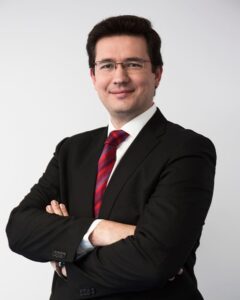
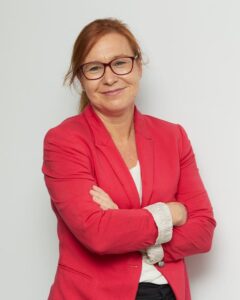
For ITAérea Aeronautical Business School, the announcement also highlights a distinctive feature of its educational approach: the participation of senior aviation professionals in its teaching staff. Raquel Martínez, Alejandro Sastre and Jorge Ávila bring experience from the two organisations into ITAérea’s air navigation teaching.
Raquel Martínez, General Director of Skyway, combines executive leadership with previous experience in safety management and air traffic control. At ITAérea, she brings the perspective of an experienced CEO in the aeronautical industry.
According to Expansión, Martínez is expected to lead the combined company.
Alejandro Sastre, Maintenance and Technical Operations Director of Skyway, contributes experience spanning technical management, engineering and auditing. His professional background includes positions at Skyway (formerly FerroNATS), SENASA, Aena and ENAIRE. His teaching at ITAérea includes an analysis of Skyway, connecting students with the technical and organisational dimensions of air navigation service provision.
Jorge Ávila, Senior Project Manager at Saerco, brings experience in operations, service development and executive management. At ITAérea, he teaches the operational and organisational management of Saerco, offering students insight into how an air navigation services company structures and manages its activities.
Their participation illustrates the value of executive education grounded in professional practice. Aviation managers must understand how commercial objectives, operational requirements, technical capabilities and safety responsibilities influence one another. Learning from professionals with experience across these areas helps students examine management decisions within the context in which they are made.
A proposed merger also provides a useful setting for considering broader leadership questions: how organisations coordinate teams, manage growth, integrate capabilities and maintain service continuity during change. These are relevant issues for professionals preparing to take on greater responsibility across the aviation industry.
ITAérea’s connection with the sector is reflected in the experience its teachers bring to the classroom. Through a teaching staff that holds senior responsibilities in aviation organisations, the school connects specialised management education with practical knowledge of the businesses and services that support air transport.
The Skyway–Saerco announcement offers a timely illustration of that connection. As the industry evolves, ITAérea continues to provide an environment in which aviation professionals can develop their management perspective through contact with experienced industry leaders.
Explore ITAérea’s faculty and master’s programmes and courses.
For further information, contact info@itaerea.es.